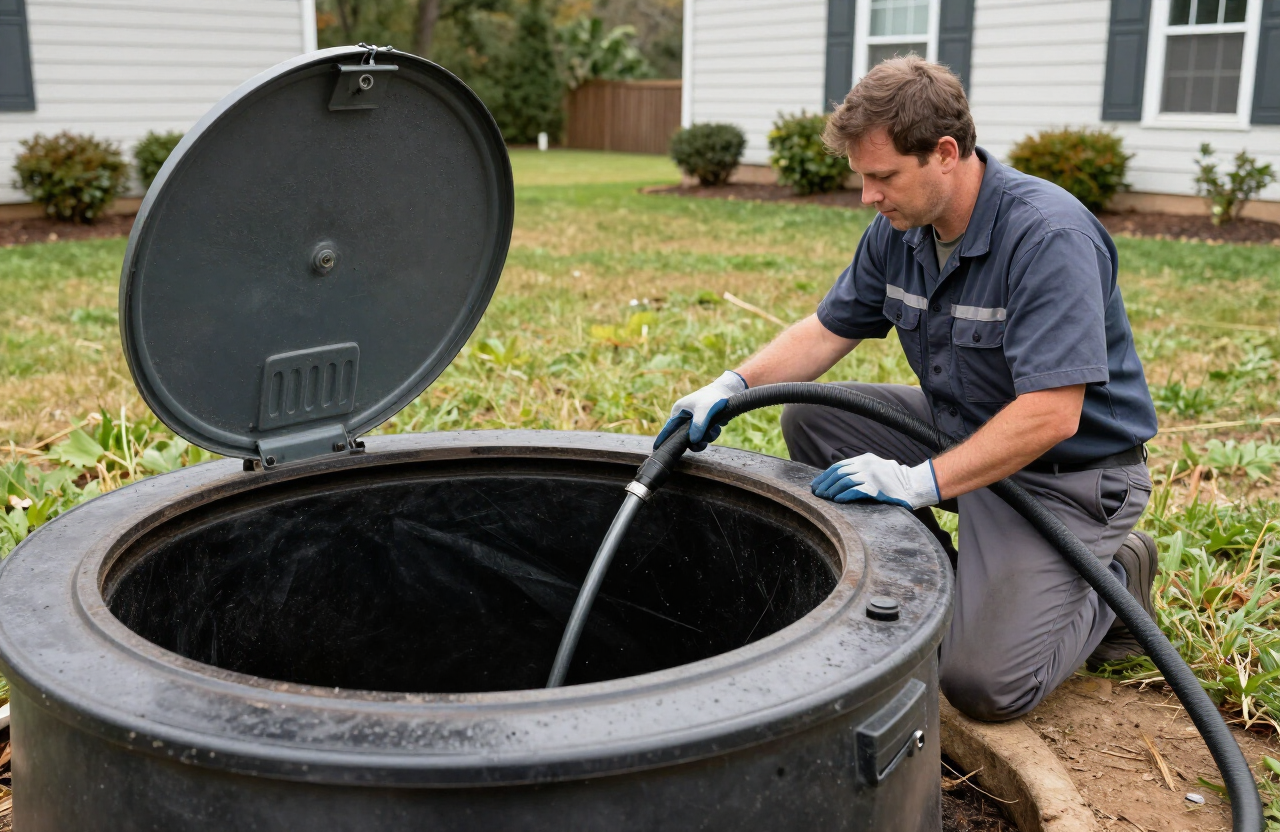
What's included in a pump-out
A proper pump-out is more than just emptying a tank. When we service your septic system, here's what actually happens on-site — and what you get in writing when we're done.
- Locating the tank and uncovering the access lids — including systems that were buried and forgotten in newer subdivisions.
- Pumping all compartments completely. Modern tanks have two compartments; both need to be pumped, not just the first.
- Inspecting the inlet and outlet baffles for cracks, corrosion, or missing tees that let solids escape into the drain field.
- Cleaning the effluent filter, a small screen that clogs over time and causes slow drains if it's ignored.
- Checking lids, risers, and seals for damage or safety hazards.
- Written notes on what we found and what to watch for, so you have a record of your system's condition.
Honest pumping cost
Most residential pump-outs in Centerton and western Benton County run $300 to $600. We don't hide the ball on pricing — here are the factors that move the number, and we confirm your exact price before we start.
| Factor | How it affects price |
|---|---|
| Tank size | Larger tanks (1,250–1,500+ gallons) hold more and take longer to pump. |
| Time since last service | Heavily overdue tanks with compacted solids take more effort. |
| Accessibility | Buried lids we have to dig up, or long hose runs, add time. |
| Distance | Properties farther out add drive time to and from the site. |
Every quote is a range until we see your system, then a firm price before work starts. No surprises.
How often to pump
The rule of thumb is every 3 to 5 years, but your real interval depends on how you live. Pump more often if any of these apply to your household:
- More people in the home (more water and waste, faster fill).
- A garbage disposal, which sends far more solids into the tank.
- A smaller tank relative to your household size.
- Frequent laundry loads or a home business that uses a lot of water.
Not sure when you last pumped? That's common, especially for buyers of newer homes. Send the request form and we'll help you get back on schedule.
Signs your tank is full
Don't wait for a backup. Send a request if you notice any of these warning signs — catching them early keeps a cheap pump-out from becoming an expensive repair.
- Slow drains throughout the house, not just one fixture.
- Gurgling sounds in toilets or drains.
- Sewage odors indoors or near the tank and drain field.
- Unusually green, lush, or soggy grass over the drain field.
- Sewage backing up into the lowest drains in the house.

Why thin Ozark soil makes maintenance critical
Northwest Arkansas sits on Ozark karst: a thin layer of rocky topsoil over fractured limestone. A drain field works by letting soil filter effluent before it reaches groundwater — but our shallow, rocky soil has very little margin for error. When a system is neglected and solids reach the drain field, there simply isn't enough soil depth to recover, and failing systems can affect groundwater quickly.
That's why maintenance here isn't just about avoiding a mess in your yard — it's about protecting the water under all of us. Staying on a 3–5 year pumping schedule is the most important thing a Benton County homeowner can do for their system and their community.
Planning to buy or sell? Pair your pump-out with a septic inspection so you know exactly what you're dealing with. Seeing warning signs already? Head to septic repair.